
Marshall County Arrest Records and Court Charges
A Marshall County arrest record documents the arrest itself. It shows who was taken into custody, the arresting agency, the date, and the booking that follows at the jail. The Marshall County Sheriff's Office keeps this booking side through its jail docket. An arrest does not set the formal charges, though. Once a person is arrested, a Marshall County prosecutor reviews the facts and decides what to file. Those filed charges become the court charge record. They are entered with the Marshall County court clerk and tracked as the case moves forward. The arrest record and the charge record start at the same event, but they follow different paths.
The two records sit in different offices. Booking and custody detail belong to the Marshall County sheriff and the jail. No public online Marshall County jail roster exists, so booking questions go to the Sheriff's Office at 662-252-1311 or to the Marshall County inmate records page for the roster channels. Court charges after arrest belong to the courts and the clerk. The full case file, with pleas and the final outcome, lives in the Marshall County criminal court records. The charges themselves, and how they change, are what a Marshall County arrest records search most often needs to answer.
How to Find Marshall County Arrest Records and Charges
Marshall County felony charges are filed in Circuit Court, and the Marshall County Circuit Clerk keeps those criminal filings. The fastest online path is the Marshall County Circuit Criminal case index from Delta Computer Systems, though it is subscription based at $30 monthly or $330 yearly. Statewide, Mississippi Electronic Courts and its public side, PAMEC, let registered users reach dockets and documents in participating courts. Booking and arrest detail are not in these court tools. That side stays with the Marshall County sheriff.
- Open the Marshall County Circuit Criminal case index from Delta, or sign in to PAMEC.
- Search by defendant name in last name, first name order, or by case number.
- Open the case and read the list of charges the prosecutor filed.
- Check each charge for its statute code, severity level, and current status.
Charges also roll up over time into a statewide criminal history held by the Mississippi Department of Public Safety, not by the county. A full record check there is separate from a single Marshall County case search.
Note: Delta and the state system warn that online indexes can lag the courthouse, so the official Circuit Clerk file controls when an online charge entry looks incomplete.
Who Files Charges in Marshall County
Charges in Marshall County are filed by prosecutors, not by the police. Felony cases run through the Third Circuit District Attorney's Office, led by District Attorney Ben Creekmore. That office covers seven counties, including Marshall County, and an assistant district attorney handles the Marshall County and Benton County docket. Lower-level county matters fall to the Marshall County Prosecutor, Shirley C. Byers, who handles many cases tied to Justice Court.
The Third Circuit District Attorney's office lists its attorneys and the counties each serves, including the Marshall County assignment.
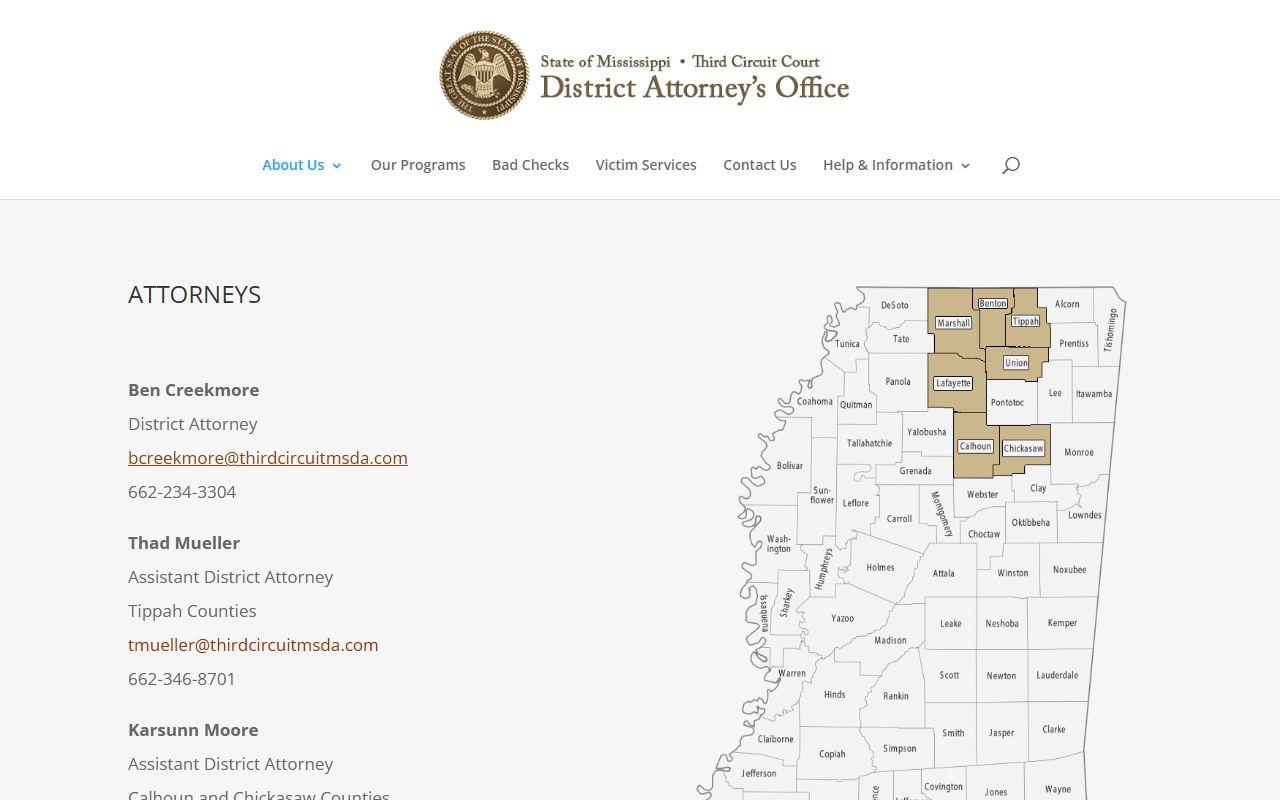
Knowing which prosecutor holds a Marshall County case tells a reader where to ask about the charges and their status. After a Marshall County arrest, the prosecutor screens the facts and decides whether to file, what to file, and how serious each charge should be. The same arrest can lead to one charge, several charges, or none at all. This screening step is why an arrest record and the final charge record often do not match.
Filing Charges After a Marshall County Arrest
The Marshall County charge record begins with a charging document. The path usually starts in Justice Court. The county courts page says all felony cases are first heard in Justice Court for an initial appearance and the filing of an affidavit. Justice Court judges hold jail court sessions three times each week, so each person gets an initial appearance within three days of arrest. From there, Marshall County felony charges move to grand jury review and on to Circuit Court.
Three documents commonly start a charge. A complaint or affidavit opens many misdemeanor and early-stage matters. An information is a charge filed directly by a prosecutor. An indictment is a formal charge returned by a grand jury, the route for serious felonies heard in Marshall County Circuit Court.
| Complaint | Information | Indictment | |
|---|---|---|---|
| Filed By | Officer / Prosecutor | Prosecutor | Grand Jury |
| Common For | Misdemeanors | Many felonies | Serious felonies |
| Where | Justice or Municipal Court | Circuit Court | Circuit Court |
| Starts | The case | The case | The case |
Charge Status in Marshall County Case Records
Charges are not fixed once they are filed in Marshall County. As a case moves, a charge can be amended, reduced, added, dropped, or dismissed. The Marshall County case record shows the current status of each count, which matters far more than the original arrest charge. Reading the status correctly keeps a reader from assuming an old Marshall County charge still stands.
| Status | What It Means |
|---|---|
| Pending | The charge is filed and the case is still open, with no final outcome yet. |
| Amended / Reduced | The prosecutor changed the charge, often to a lesser offense or a corrected count. |
| Dismissed | The court dropped the charge, so it no longer moves toward a conviction. |
| Nolle Prosequi | The prosecutor formally chose not to pursue the charge at this time. |
Note: A dismissed or nolle prosequi charge can sometimes be refiled, so confirm the current status with the Circuit Clerk before relying on a single online entry.
Charges vs. Convictions
Being charged is not the same as being convicted. A charge is an accusation that a Marshall County prosecutor must still prove. A conviction comes only after a guilty plea or a verdict. Many Marshall County arrest records lead to charges that are later reduced, dismissed, or never proven. Treating a charge as guilt is both unfair and inaccurate.
| Charge | Conviction | |
|---|---|---|
| Stage | Accusation | Verdict or plea |
| Burden of Proof | Probable cause | Beyond a reasonable doubt |
| Can Change | Amended, reduced, or dropped | Stands unless appealed |
| Public Record | Yes | Yes |
Charge Codes and Severity Levels
Each charge ties to a specific Mississippi statute, and that code defines what was alleged. Severity falls into broad levels. A felony is the most serious class, tried in Marshall County Circuit Court. A misdemeanor is a lower-level offense, often handled in the Marshall County Justice Court or Holly Springs Municipal Court. One Marshall County arrest can produce several separate charges at different levels, each with its own code and status. A Marshall County charge entry usually carries a handful of fields worth reading closely.
- The Mississippi statute number that defines the offense
- A plain description of the alleged conduct
- The severity level, such as felony or misdemeanor
- A count number when one arrest yields multiple charges
- The current status of that count in the Marshall County case
Public Defenders and the Right to Counsel
A person facing charges in Marshall County has the right to counsel, and many Marshall County defendants qualify for a public defender. Appointment happens through the Marshall County court where the case is pending. The Mississippi Office of State Public Defender supports defense services across the state and keeps directory resources for the public.
The Mississippi Office of State Public Defender describes its role in indigent defense across Mississippi courts.

Defendants who cannot afford a lawyer for Marshall County charges should raise it with the court at the first appearance. Finding the right defender contact can take a directory, and the office publishes a lookup that points to defenders by area.
Its public defender directory page explains how defender listings are maintained statewide.
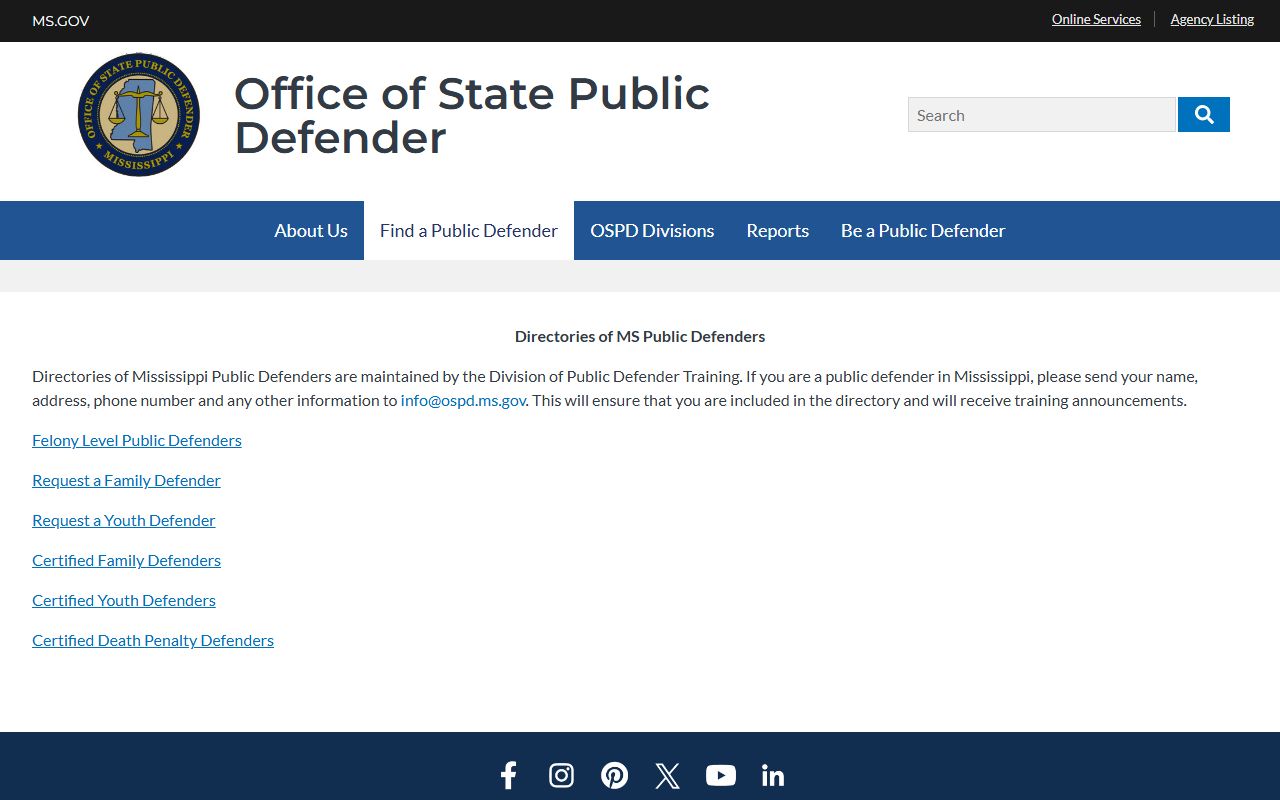
For a specific Marshall County assignment, the local court handling the charges remains the place to ask about appointed counsel for a Marshall County case.
Marshall County Drug Court and Charge Outcomes
Some Marshall County charges can be resolved through a diversion program instead of a standard conviction. The Third Circuit District Drug Intervention Court serves Marshall County and several neighboring counties. After screening and approval, a judge sentences the Marshall County defendant into a rehabilitation program that runs at least three years, with random drug testing and weekly docket calls led by the judge.
The Third Circuit District Drug Intervention Court outlines its program and the counties it serves, including Marshall County.
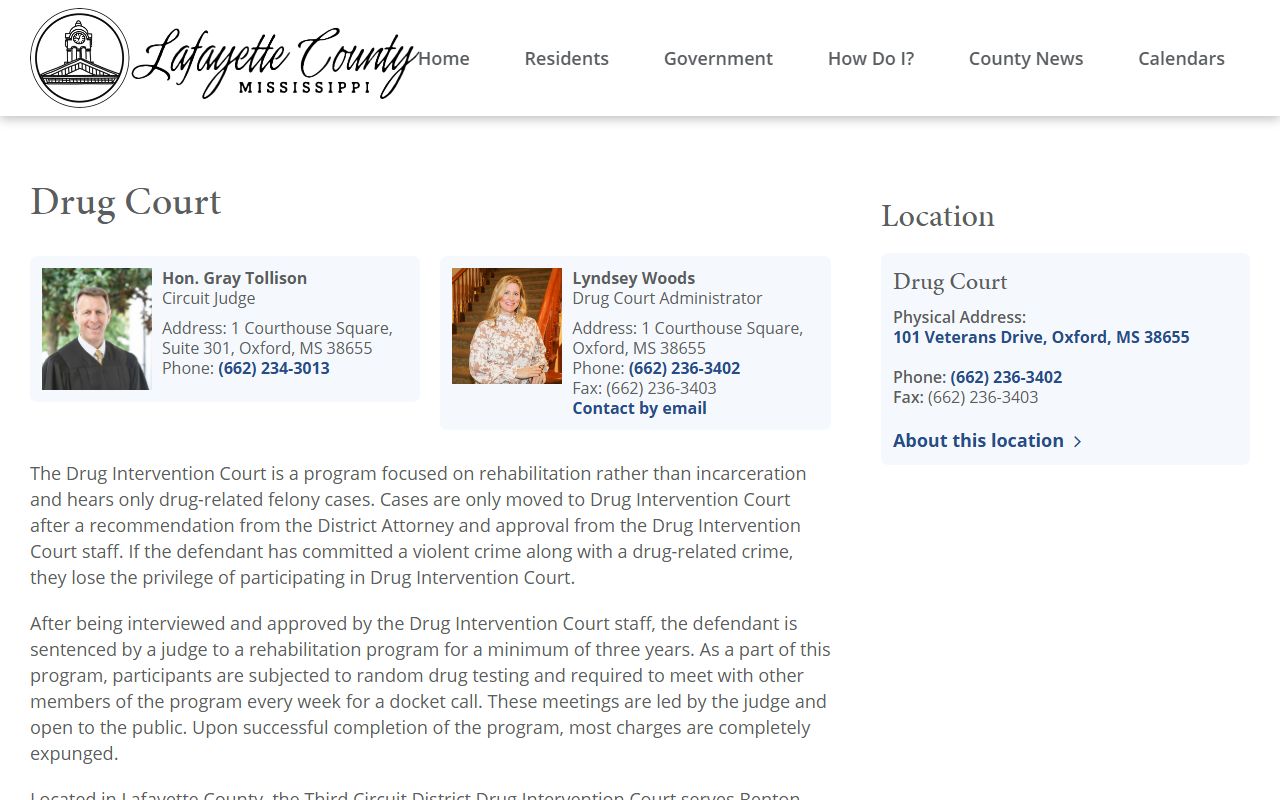
Successful completion can lead to most Marshall County charges being completely expunged, which changes what later shows in a Marshall County arrest records search. The program also has a long track record across the district.
A Mississippi Judiciary drug court report noted hundreds of participants from the district, with Marshall County among the counties served.
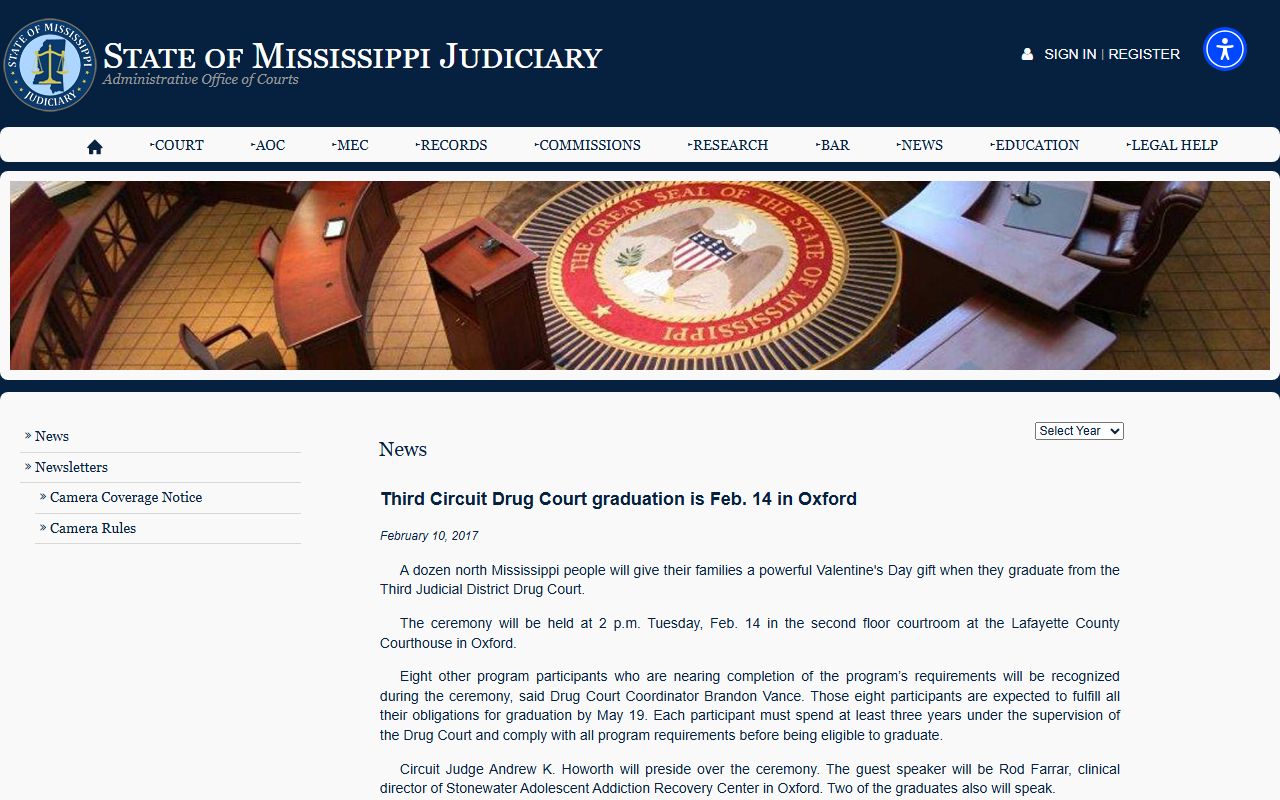
Eligibility is decided case by case, so the Circuit Clerk, the district attorney, or defense counsel can confirm whether a Marshall County charge qualifies.
Federal Charges in Marshall County
Not every charge tied to Marshall County is a state case. Federal crimes are prosecuted in the U.S. District Court for the Northern District of Mississippi, and Marshall County falls in that district. Federal charges are filed and tracked separately from Marshall County records, with their own docket system.
The U.S. District Court for the Northern District of Mississippi handles federal cases for the region that includes Marshall County.
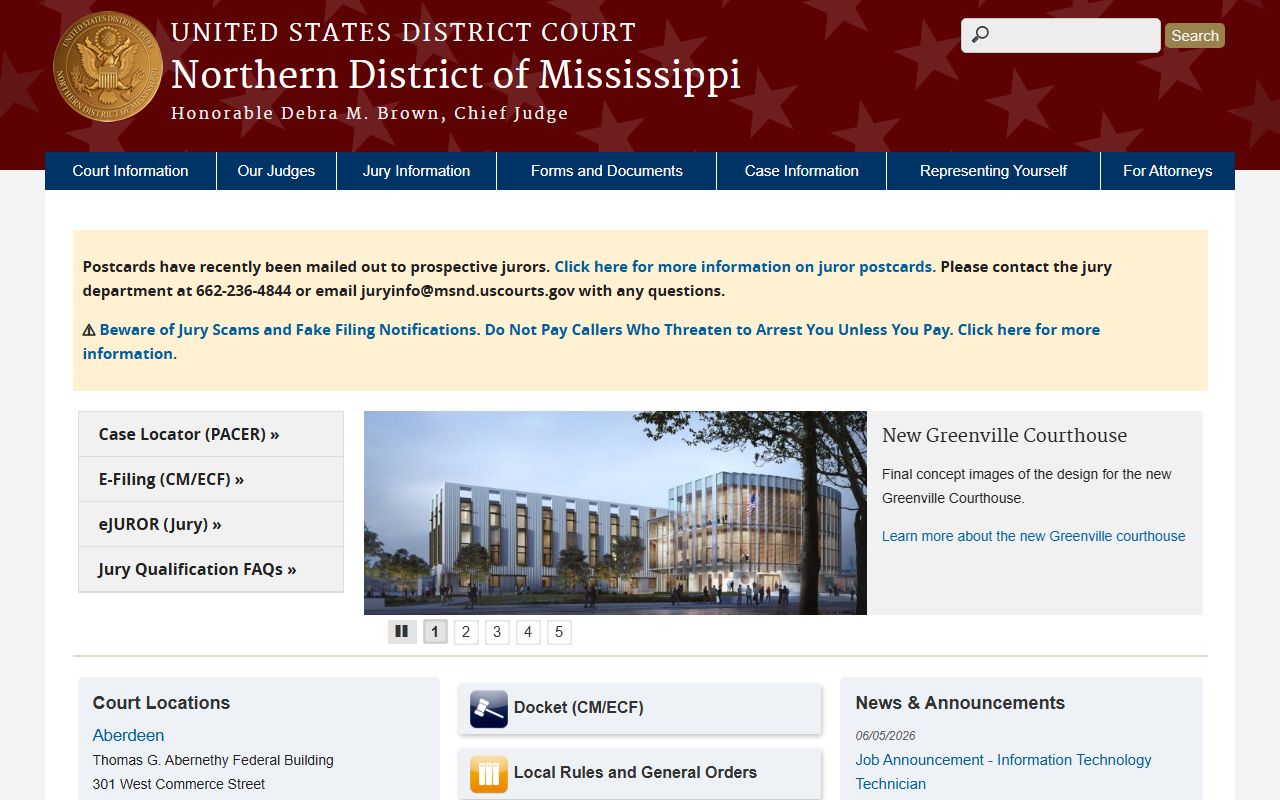
Federal charge records are reached through PACER, the federal court access service, rather than the county Circuit Clerk or any Marshall County arrest records channel.
Statewide Charge and Criminal History Lookups
A single Marshall County case search shows the charges in one matter. A full criminal history pulls charges together across courts and counties. In Mississippi, the Department of Public Safety holds the central criminal history, and the state also runs a public sex offender registry under Miss. Code Ann. Section 45-33-25. The registry can be searched by name or area after a disclaimer. These statewide tools differ from a Marshall County court charge search and serve different purposes.
Note: A statewide criminal history check and a single Marshall County case search answer different questions, so use both when a complete picture matters.
Sealed vs. Expunged Records
Some Marshall County charges leave public view. Mississippi law lets eligible records be expunged under Miss. Code Ann. Section 99-19-71, which can cover dismissed cases, acquittals, certain misdemeanors, and some convictions. Sealing limits access, while expunction removes the record from ordinary public access. A Marshall County charge that has been expunged should not appear as a normal searchable case.
| Sealed | Expunged | |
|---|---|---|
| Visibility | Hidden from public view | Removed and treated as never existing |
| Law Enforcement | Limited access remains | Very limited access |
| Eligibility | Set by court order and statute | Dismissed, acquitted, or qualifying cases under Section 99-19-71 |
Until an expunction order is entered and processed, public indexes may still show the Marshall County charge.
Restricted Charge Records in Marshall County
Several charge records are restricted in Marshall County. Juvenile matters are confidential under Mississippi youth law, and youth law-enforcement records carry special limits under Miss. Code Ann. Section 43-21-255. Marshall County charges tied to active investigations may be withheld. Sealed and expunged Marshall County charges are removed from ordinary access. For records held outside the courts, the Mississippi Public Records Act sets the path, and a denied request can be raised with the Mississippi Ethics Commission.
- Juvenile and youth court charges
- Sealed or expunged charges
- Charges tied to active investigations
- Records with confidential personal identifiers
Important: This site is not an FCRA-regulated consumer reporting agency, and its information cannot be used for employment, credit, housing, or other FCRA-covered decisions.